Windows Hardening & Continuous Compliance: Keeping 200+ Security Settings Secure 24/7

Every Operating System – not even counting the software installed on top of it – has a myriad of configuration settings that affect security. Windows Server alone has 4000+ configurable options, out of which 200+ are important for security & compliance efforts. They include:

  • SMB, RDP, UAC, …
  • PowerShell (execution policy, script block logging, transcription)
  • Various Logging Options (audit policies, log sizes, retention)
  • User Rights Assignments
  • Network settings like LLMNR, NetBIOS over TCP/IP and LDAP signing

These settings are at the very core of all of your security & compliance efforts – and they are surprisingly often ignored. Leaving the very center of your end points unprotected makes it that much more difficult for other security tools to do their job – whether it’s AV, EDR, a firewall, and the list goes on. A single wrong setting will not only cause compliance risks – but allow an attacker (internal or external) to compromise a host or an entire AD domain.

Why a single setting matters

Point in case: LLMNR is enabled out of the box on every Windows installation, and all it takes is one mistyped share name on a workstation for a tool like Responder to capture a NTLMv2 hash – or relay it straight to another host if SMB signing isn’t required there either. The same goes for SMBv1 that was never disabled, a service account that somehow ended up with “Act as part of the operating system” or “Debug programs”, or PowerShell script block logging that was never turned on, which simply means that whatever an attacker runs in PowerShell will never show up in any log. None of these will be flagged by a vulnerability scanner, since there is no CVE to flag – yet every single one of them is a well-traveled path to Domain Admin.

Making sure that your Windows servers and workstations are hardened is not only a key requirement for compliance – it also reduces your attack surface for both internal and external threats. This isn’t just our opinion either – essentially every framework and benchmark out there boils down to these settings in one way or another. The CIS Benchmarks for Windows Server and Windows 11 are, at their core, a list of several hundred recommended values for exactly these settings, the DISA STIGs cover the same ground for DoD environments, and NIST 800-171 (and with it CMMC) explicitly requires that you establish a secure baseline configuration (CM.L2-3.4.1 & 3.4.2) and then keep it that way. PCI DSS, HIPAA and ISO 27001 phrase it differently, but they all end up in the same place: Know what your settings are supposed to be, make sure they are, and be able to prove it to an auditor.

But how do you make sure that all these settings not only are correct (= secure), but also stay correct, secure and compliant?

Why Group Policy & point-in-time audits aren’t enough

Most organizations configure everything correctly once, usually with Group Policy (reminder: you can monitor group policy changes with EventSentry), and then hope and/or assume that it stays that way. Alas, settings drift: A vendor installer re-enables a service, a new GPO with a higher link order overrides an older one, a feature update resets a registry value, or an admin “temporarily” relaxes UAC on a server to troubleshoot something and never puts it back. Group Policy is an enforcement mechanism, not a verification mechanism – it re-applies most settings only when the GPO itself changes, so a value that was modified locally can stick around for quite a while, it doesn’t apply to workgroup machines and cloud VMs that were never domain-joined. A quarterly audit or a one-time hardening project tells you that a host was compliant on that day – but not the next day and beyond.

Vulnerability scanning is important and should be part of any comprehensive security strategy, but it can’t evaluate the majority of security and configuration settings in Windows – only software that runs locally (read: an agent) can evaluate these settings.

What is continuous compliance?

Enter continuous compliance, where all relevant security and configuration settings are constantly evaluated and verified. Automatically. No scans to schedule or run, no machines to connect to – just up-to-date validation of all monitored hosts, no matter if it’s a local DC or a laptop at someone’s house. In other words, instead of finding out during the next audit (or, worse, during the next incident) that a setting has been wrong for six months, you find out when it changes – and you can fix it before anybody else notices.

Continuous compliance with EventSentry

Continuous compliance is made possible by EventSentry’s validation scripts, a module which contains over 200 checks that continuously run in the background on every monitored host. Results are reviewed in the web reports and can be classified by compliance framework (e.g. CMMC, NIST 800-171), severity, host and more, which also makes for a pretty convenient piece of evidence when the auditor asks how you monitor your baseline. Remediation steps are provided for every single script, with group policy remediation coming in v6.1.

Chances are that at least one of those 200+ settings on your network isn’t what you think it is – the question is just whether you find out before or after somebody else does.
EventSentry v5.1: Anomaly Detection / Permission Inventory / Training Courses & More!

We’re extremely excited to announce the availability of the EventSentry v5.1, which will detect threats and suspicious behavior more effectively – while also providing users with additional reports and dashboards for CMMC and TISAX compliance. The usability of EventSentry was also improved across the board, making it easier to use, manage and maintain EventSentry on a day-by-day basis.

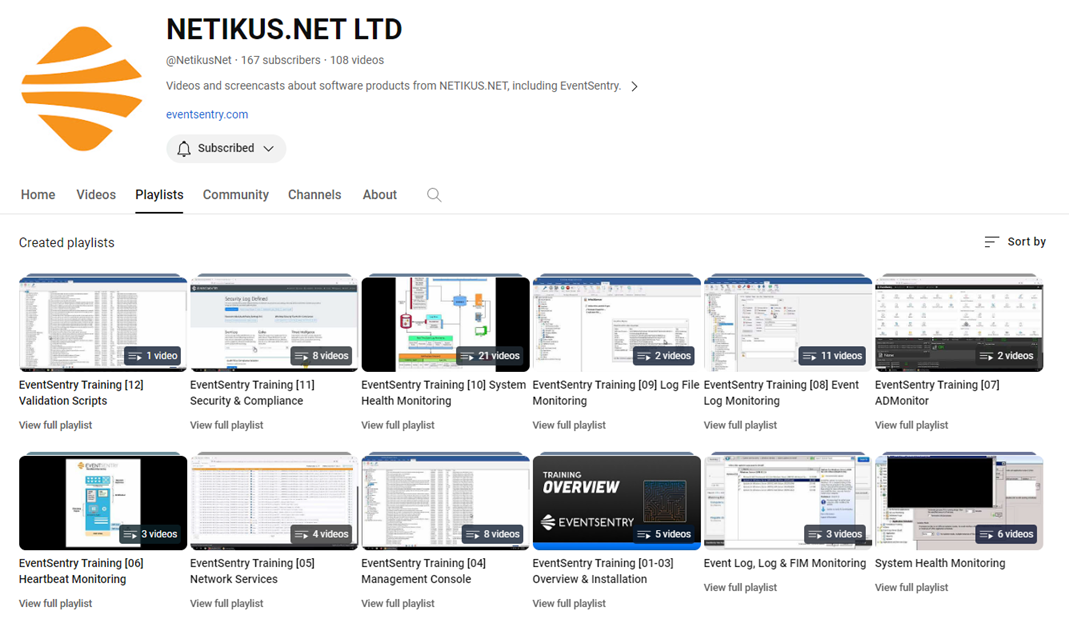
We also released 60+ training videos to help you get started and take EventSentry to the next level. The videos will be available to everyone for free both on YouTube and in your account area.

Anomaly Detection

One of the best real-time event log monitoring engines got a lot smarter in v5.1 and can now detect unusual behavior like the following:

  • A user who never logged on to a server/workstation
  • A user connects from a remote IP from which he/she usually doesn’t normally connect from
  • A previously unknown process starts
  • A process loads a DLL it has never loaded before (requires Sysmon)

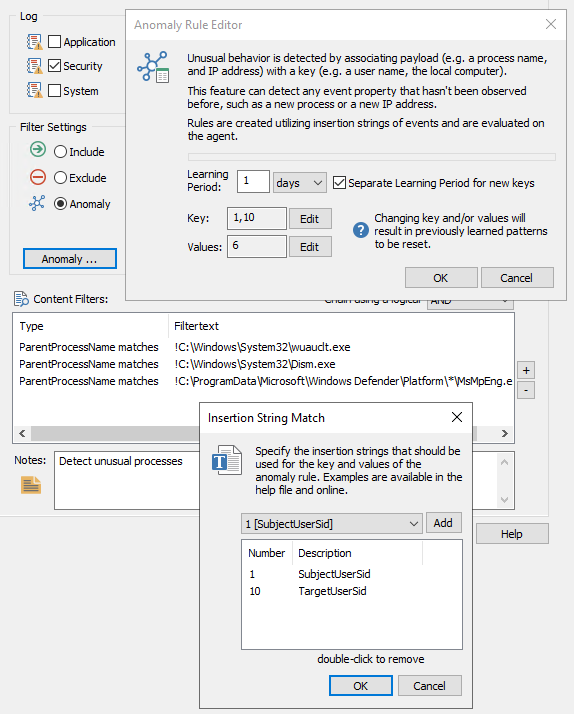
But the best part about the new Anomaly detection is that it’s customizable – so anybody can create their own anomaly rules based on their needs.

Anomaly filters utilize insertion strings of events, so they work best with well-formatted events from the security or Sysmon event logs.

EventSentry ships with a number of built-in anomaly filters, but watch the official training video to understand how anomaly filters work to create your own.

Database Maintenance & Web-Based DB Maintenance Jobs

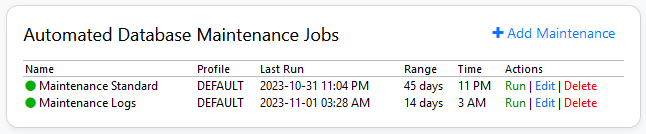
Also new is the ability to schedule database maintenance jobs directly from the web reports – so it’s no longer necessary to create or edit (embedded) scripts, application or task schedulers just to keep your database size in check. Simply schedule a job in the web reports and review the results after the job completed. The maintenance jobs themselves have also been improved and will attempt to free up disk space after each purge cycle when using the built-in database.

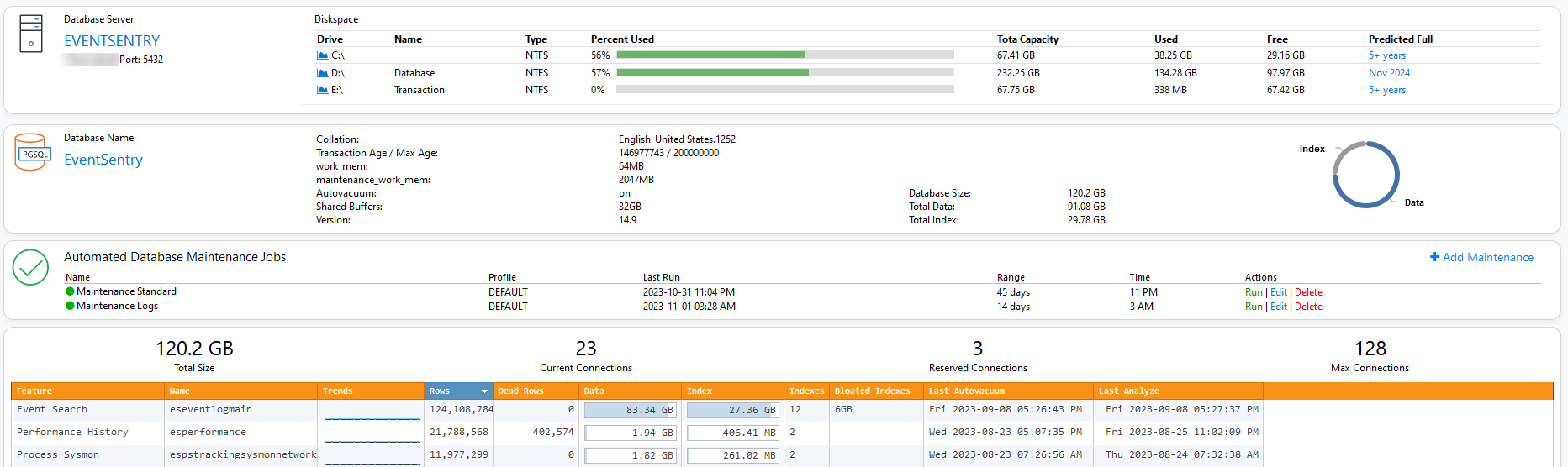
We’ve also improved the database usage page, which now shows significantly more details about the database health, including trends to help identify features that are growing in size.

Dynamic Package Updates

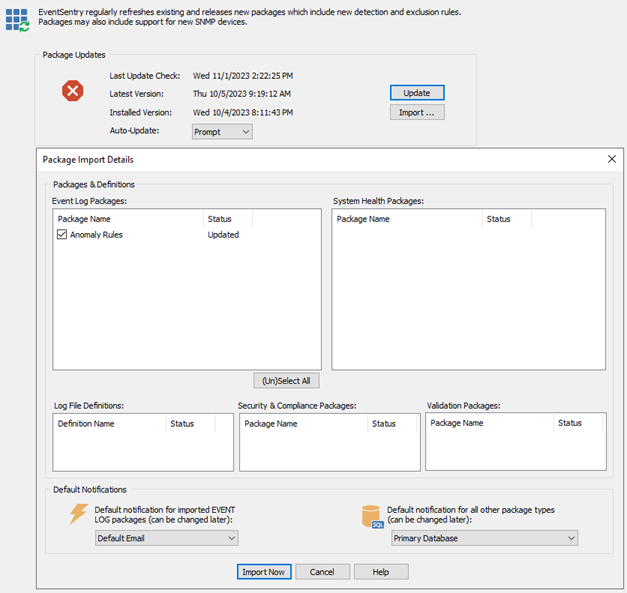
Unlike validation scripts, which (can) automagically update in the background so you can enjoy the latest checks with the click of a button, package updates have been a bit slower and more clunky. But this is all in the past, as package updates use the same update engine like our popular validation scripts, and can now seamlessly keep select packages up to date.

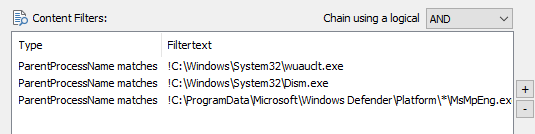
As such, users with active maintenance agreements can expect a lot more package updates to be made available to help you detect and defend against emerging threats. This new functionality also allows you to apply filters rules in JSON format directly into the management console, e.g. from KB articles or blog posts.

Permission Inventory

Keeping NTFS file permissions clean and updated can be a tedious task, even when you follow best practices (e.g. create groups for each file share and assign permissions to those groups), it can be quite difficult to stay on top of all file shares and folders, especially in medium and large-sized networks.

To which files and folders does a user have access? Who has access to critical folders?

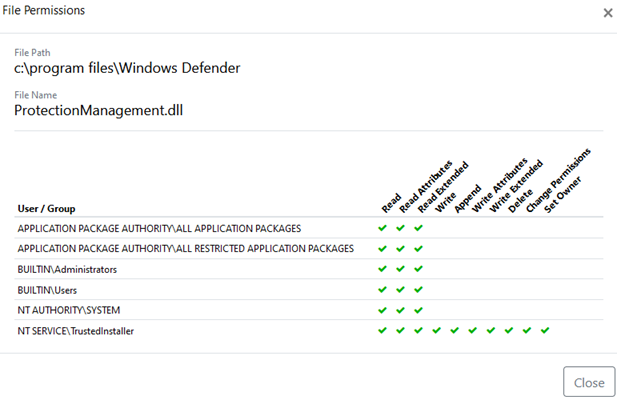
EventSentry’s new permission inventory enumerates configured folders and their permissions (on a configurable schedule – e.g. daily), and presents them in the familiar Summary/Detailed view, making it straightforward to answer exactly those questions.

Watch the official training video for more information.

Improved Features

Every database-enabled feature in EventSentry can now store data in multiple databases, something that was previously only available in select features. This will make it easier to store all collected data in an active as well as an archive database simultaneously.

ADMonitor can now send data through the collector, the only component in EventSentry that did previously not have support for the collector.

EventSentray

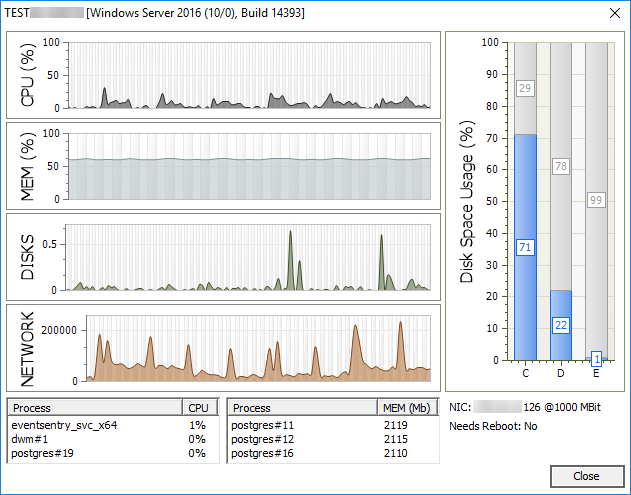
EventSentray now also shows the network utilization and sports a useful “Internet Test” dialog which can test various aspects of your Internet connection – something that’s especially handy for mobile endpoints (aka “laptops”). The official training video has more information on EventSentray and how to configure & deploy it.

Compliance

Compliance requirements like CMMC, PCI, HIPAA, NIST and others continue to evolve and affect more and more companies. As important as compliance frameworks are with providing structure and guidance, companies often find it difficult to apply what are often vague rules and requirements.

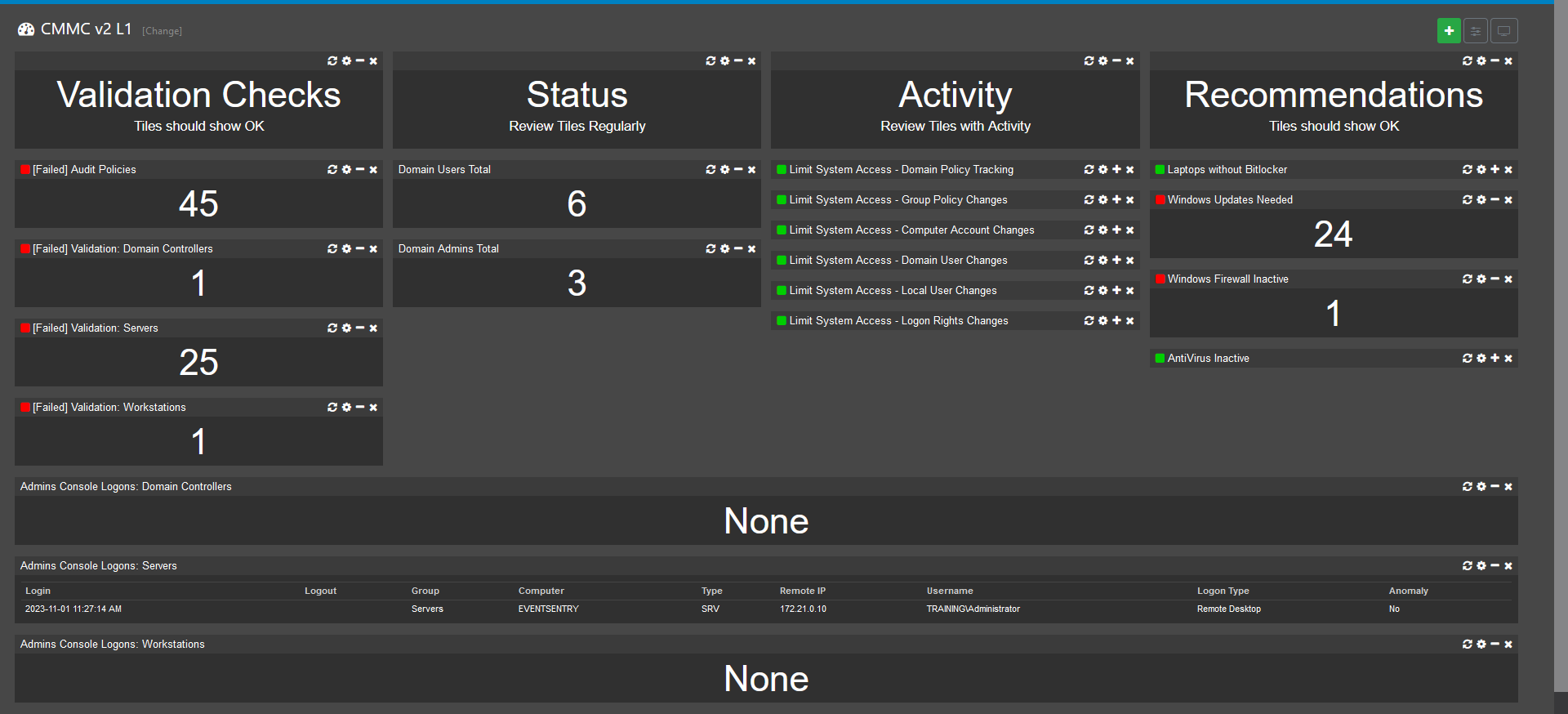
Our new CMMC v2 and TISAX reports/dashboards bring together many features in EventSentry and provide a real-time status and overview of your compliance status. And our new dashboards provide actionable data that can be used to increase the security of your network – not just check boxes.

Usability Improvements

While every EventSentry release tends to incorporate little tweaks and improvements, v5.1 features many usability and troubleshooting enhancements:

  • Insertion strings in filters (when available) now show the name of the string instead of just the number, making it a lot easier to create and manage complex filters.
  • The “Save Configuration” prompt in the management console would often be displayed even when no changes were made. This has been improved significantly and you should see this prompt much less often in v5.1, with more improvements planned in future versions.
  • A new “GoTo” button will jump to any item in the tree that contains the specified text.
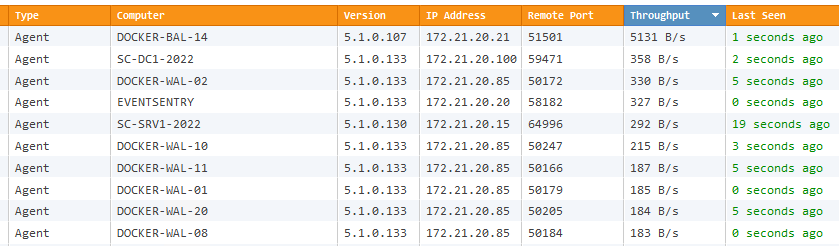
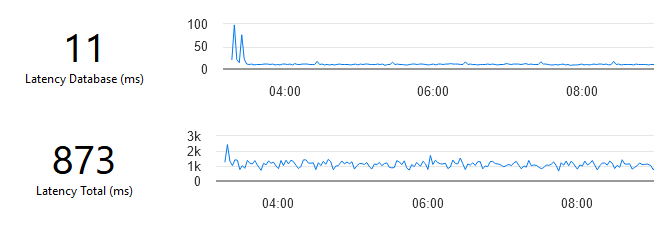
  • Collector users can see collector health right in the management console without having to access the web reports, while the collector status page in the web reports also shows the collector latency and throughput of individual agents.

EventSentry Training

In addition to a EventSentry’s comprehensive documentation all users now have access to a 60+ free training videos – with a total runtime of over 10 hours – organized into playlists. All videos are accessible on our YouTube channel in the Playlists section, with a training section on eventsentry.com coming soon as well. We highly encourage you to browse the new training videos – they are useful for new users and experienced users of EventSentry alike. Please upvote videos you enjoyed, we’re also happy for any feedback!